Black EPDM's One Real Advantage in a Snow Climate
Review the scope, field conditions, system options, and planning considerations for this commercial roofing topic.
Read More →
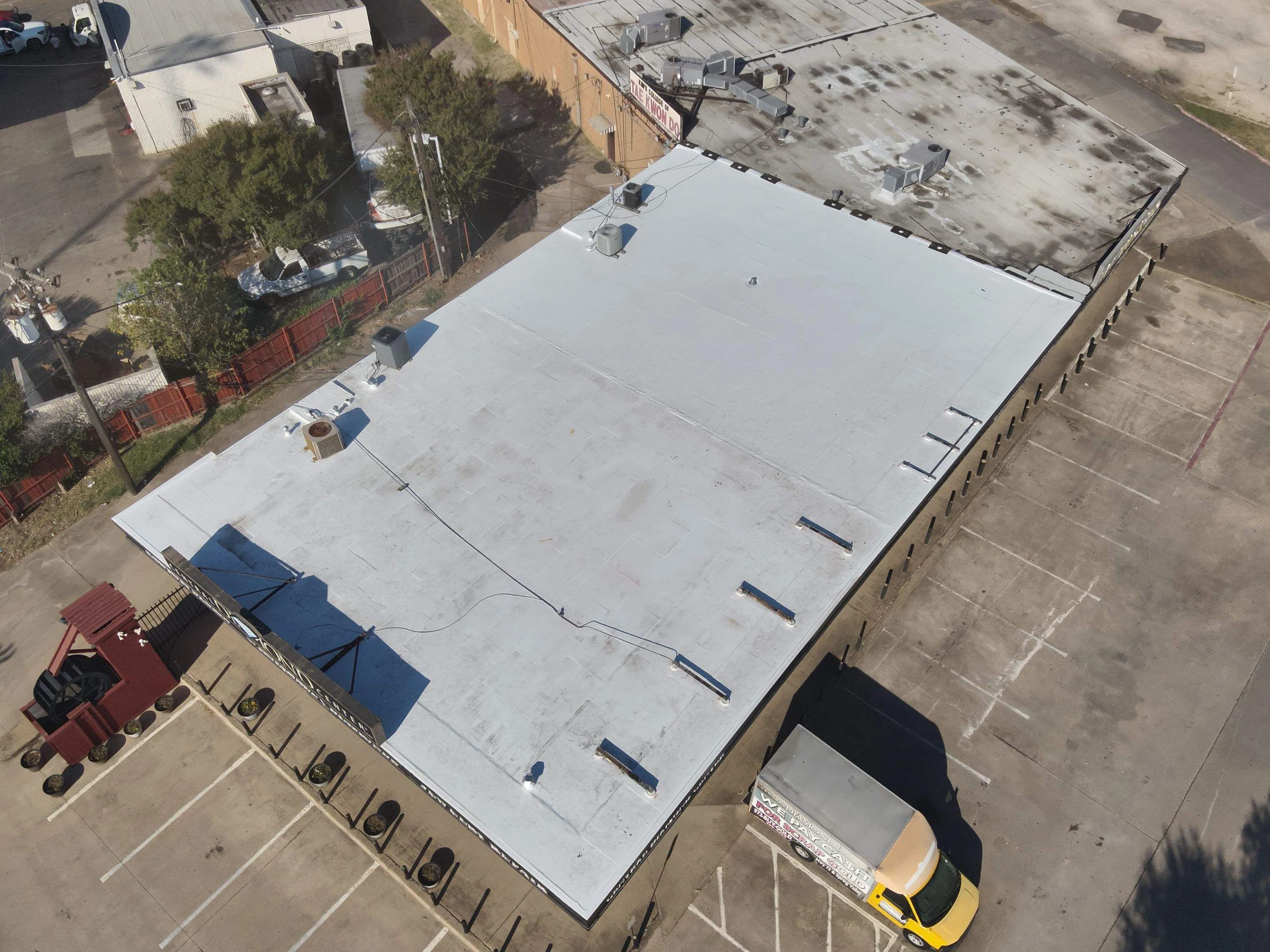
80-mil is the thickest common TPO membrane on the market, built for roofs that take genuine physical abuse: ballast stone, heavy foot traffic, rooftop solar racking. It also shows up on bids for roofs that don't need it, padding a number under the reasonable-sounding argument that thicker is always better.
Distribution center rooftops and industrial buildings in the Malta tech corridor near GlobalFoundries, along with warehouses running the I-90 belt, tend to carry heavy mechanical units and frequent maintenance access. Ballasted systems, where loose stone physically abrades the membrane surface over time, are where the extra mil thickness of an 80-mil versus 60-mil comparison actually buys additional service life.
Solar-ready rooftops matter here too. Racking systems anchored or ballasted on membrane increase point loads and installation traffic, and distribution centers weighing rooftop solar in coming years get real margin against penetrations and abrasion under racking feet from the heavier sheet.
Cost comparisons over a full service life tend to favor 80-mil on these higher-exposure roofs even though the upfront material cost is higher. A membrane that needs earlier recoating or partial replacement because of ballast wear or racking damage ends up costing more across a twenty-year ownership horizon than the initial mil-thickness upgrade would have, which is the argument we walk owners through rather than just quoting a bigger number.
A retail strip roof with light foot traffic, no ballast, and standard rooftop units serviced occasionally performs comparably on 60-mil for practical purposes, and the extra cost buys minimal added service life. Some contractors upsell 80-mil across the board regardless of exposure, which is worth questioning directly.
The cost difference over a large roof adds up, and if the attachment method is fully adhered or mechanically attached without ballast abrasion, the membrane isn't taking the kind of surface wear that justifies the heavier sheet.
We see this most often on office park roofs along the Latham corridor and smaller professional buildings where the rooftop footprint is minimal, one or two condenser units, no ballast, no planned solar. On those roofs, spending the difference on a better attachment detail or a longer warranty term does more for the owner than a heavier membrane the roof will never physically stress.
Stone ballast shifts slightly under wind and thermal movement, grinding against the membrane surface over years. Deeper mil thickness resists this wear longer, and freeze-thaw cycles that heave ballast stone slightly each winter add to that movement.
On ballasted TPO roofs we inspect existing membrane wear patterns at high-traffic zones before recommending a mil thickness for a recover, rather than quoting a default number without looking at how the current roof has actually held up.
Wind exposure also varies across a single roof, with corners and perimeter zones typically taking more ballast movement than the field. That's part of why we look at wear patterns by zone during an inspection rather than judging a roof's overall condition from one spot near the access hatch, which is often the least-abraded area on the whole roof.
A bid that jumps straight to 80-mil without explaining why, especially on a roof with no ballast or heavy traffic, is worth a direct question about whether the upgrade is justified by the roof's actual conditions or just added to the estimate.
On an 80-mil TPO bid we check for:
Government and hospital buildings around downtown Albany often carry dense rooftop mechanical loads accumulated over decades of retrofits, and recover projects on these roofs put real traffic on the new membrane during and after install. 80-mil holds up better under that combined weight and disturbance without requiring full tear-off.
We evaluate rooftop equipment density and planned future access, not only current condition, before recommending which mil thickness fits a recover scope on an institutional building expected to stay in service for decades.
On a hospital or medical office building roof specifically, rooftop mechanical density tends to grow over time as departments add equipment, and a membrane specified for today's rooftop footprint can end up under-built for what the roof carries five or ten years later. We factor that likely growth into the mil-thickness recommendation rather than sizing strictly to current conditions on the day of the survey.
No. Ballasted roofs, heavy foot traffic, and roofs carrying rooftop solar racking are where 80-mil earns the extra cost. A low-traffic fully adhered retail roof usually doesn't need it.
The per-square cost difference is real but modest; on a large roof it adds up, which is why the exposure argument matters more than a blanket recommendation either way.
Yes, gradually. Stone shifting under wind and thermal movement abrades the membrane surface at contact points over years, and thicker membrane resists that wear longer.
It handles point loads and installation traffic better than thinner membrane, though racking layout and attachment method still need to be engineered for the specific roof.
Usually not. That's the scenario where 60-mil performs comparably and the extra cost doesn't buy meaningful added service life.