TPO for Albany's Government and Distribution Roofs
Review the scope, field conditions, system options, and planning considerations for this commercial roofing topic.
Read More →
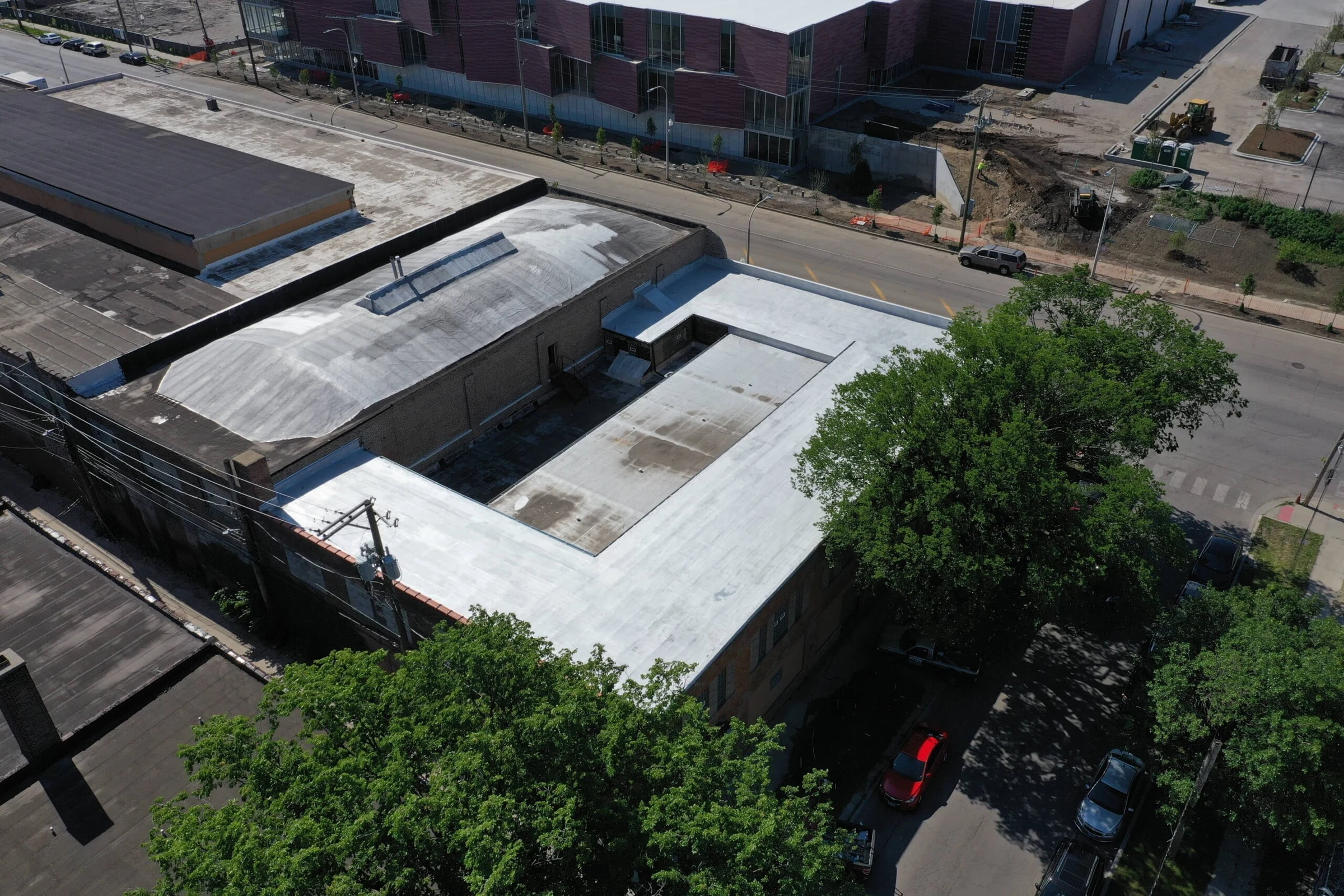
Modified bitumen shows up constantly on state and municipal buildings around Albany, usually as a recover system over an older built-up roof or as the replacement choice on buildings where the deck and structure favor a heavier, multi-ply assembly. The application method matters more here than on most single-ply decisions, and it's the piece bids gloss over most.
State office buildings and courthouses built during Albany's mid-century institutional expansion often have roof structures designed around a heavier built-up or modified bitumen assembly, and switching to a lightweight single-ply system isn't always a straightforward decision when the original design assumed more weight and redundancy on the roof deck.
We also see a good amount of modified bitumen on school district buildings and county facilities, where a multi-ply system's redundancy against a single point of failure appeals to facility managers who don't want to explain a leak to a superintendent or a county legislature.
Smaller commercial buildings in Rensselaer and Rotterdam with older asphalt roofing history are common recover candidates, where modified bitumen goes over an existing built-up roof rather than requiring a full tear-off.
Modified bitumen installs three different ways, and a proposal that just says "modified bitumen roofing" without naming the application method is skipping a decision that affects cost, safety, and performance.
Torch-applied systems use an open flame to melt the bitumen and bond the sheet, which requires specific fire watch procedures and permitting, especially relevant on occupied government buildings where a fire watch protocol needs to be coordinated with building security and operations. Cold-applied systems use adhesive instead of flame, trading some installation speed for a lower fire risk profile that a lot of institutional buildings prefer. Self-adhered sheet is a third option, faster to install but with its own bonding requirements around deck temperature and preparation.
A bid on a state or municipal building that doesn't address fire watch procedures for a torch-applied system, or doesn't explain why cold-applied or self-adhered is being used instead, is missing information that facility managers need before scheduling the work with building operations.
Modified bitumen systems are typically installed in multiple plies: a base sheet, sometimes an interply sheet, and a cap sheet on top. The number of plies specified directly affects the roof's redundancy and expected service life, and it's a detail that's easy to write vaguely on a proposal and hard to verify after the fact once the roof is covered.
Bitumen application rate, meaning how much material bonds each layer, also varies between contractors and affects how well the plies actually adhere to each other. A rushed installation with a thin application rate can look identical to a properly done roof on the day it's finished.
What we make sure is spelled out on a modified bitumen proposal:
A lot of our modified bitumen work in the Capital Region is a recover over an existing built-up roof rather than a full replacement. That only works if the existing roof is structurally sound and dry underneath, which means a moisture assessment has to happen before we recommend adding another layer instead of tearing off down to the deck.
Buildings with a history of ponding water or previous patch-repairs in the same spots are more likely to have hidden wet insulation, and covering that up with a new modified bitumen layer just delays a bigger problem instead of solving it.
Cold-applied adhesives and self-adhered sheet both need minimum temperatures to bond correctly, and torch-applied systems become more difficult to control safely in wind and cold. We schedule modified bitumen projects for the seasonal window where the application method being used can actually perform as designed, rather than compressing a schedule into December to meet a budget deadline.
Facility managers working on a fiscal-year budget cycle sometimes want a winter start regardless, and in those cases we'll explain honestly what the compressed schedule does to installation quality before agreeing to move forward, rather than quietly cutting corners to make the calendar work.
Yes, with proper fire watch procedures coordinated with building security and operations. We'll walk your facilities team through exactly what that involves before scheduling.
It depends on the existing roof structure and whether it's new construction or a recover, but we'll explain the tradeoff between ply count, cost, and expected service life for your specific building.
Often yes, if a moisture assessment confirms the existing roof is dry and structurally sound. We won't recommend a recover over a roof we haven't checked for hidden moisture.
Granulated cap sheet has built-in UV protection from mineral granules, while a smooth cap sheet typically needs a reflective coating applied afterward. Each has different maintenance needs long-term.
Fire risk and building occupancy are the main reasons. Cold-applied avoids open flame entirely, which matters more on occupied buildings than on a vacant warehouse.