What a Complete Reroof Bid Should Actually Show You
Review the scope, field conditions, system options, and planning considerations for this commercial roofing topic.
Read More →
Built-up roofing is the system that went on most of Albany's government and institutional buildings when they were originally constructed, and a lot of that gravel and multi-ply asphalt roofing is still up there today, decades past when it was first installed. Deciding whether to recover, patch, or fully replace one of these roofs starts with understanding what's actually left of the original assembly.
The state office towers and institutional buildings built during Albany's mid-century expansion around the Empire State Plaza era were roofed with built-up systems as standard practice at the time. Many of those original roofs have already been recovered once, sometimes twice, with an additional modified bitumen or single-ply layer added over the years rather than a full tear-off back to the deck.
Older school buildings across the Capital Region and some county facilities also carry original or once-recovered built-up roofs, often gravel-surfaced, that are now well into or past their expected service life.
We also find built-up roofing on some of the older mill and industrial buildings in Troy and Cohoes that predate the area's shift toward mixed commercial and office use, where the roof has simply never been fully replaced since the building's industrial days.
A built-up roof is made of multiple layers of roofing felt bonded together with hot or cold bitumen, and the number of plies, typically three or four, directly determines the roof's redundancy against a single failure point. A proposal that quotes "built-up roofing" without specifying ply count is quoting a system whose actual durability you can't evaluate against a competing bid.
Bitumen application rate between plies matters just as much. An installer applying too little bitumen between layers produces a roof that looks complete but has weaker interply bonding, which shows up years later as blistering or delamination that isn't visible until it's already a leak.
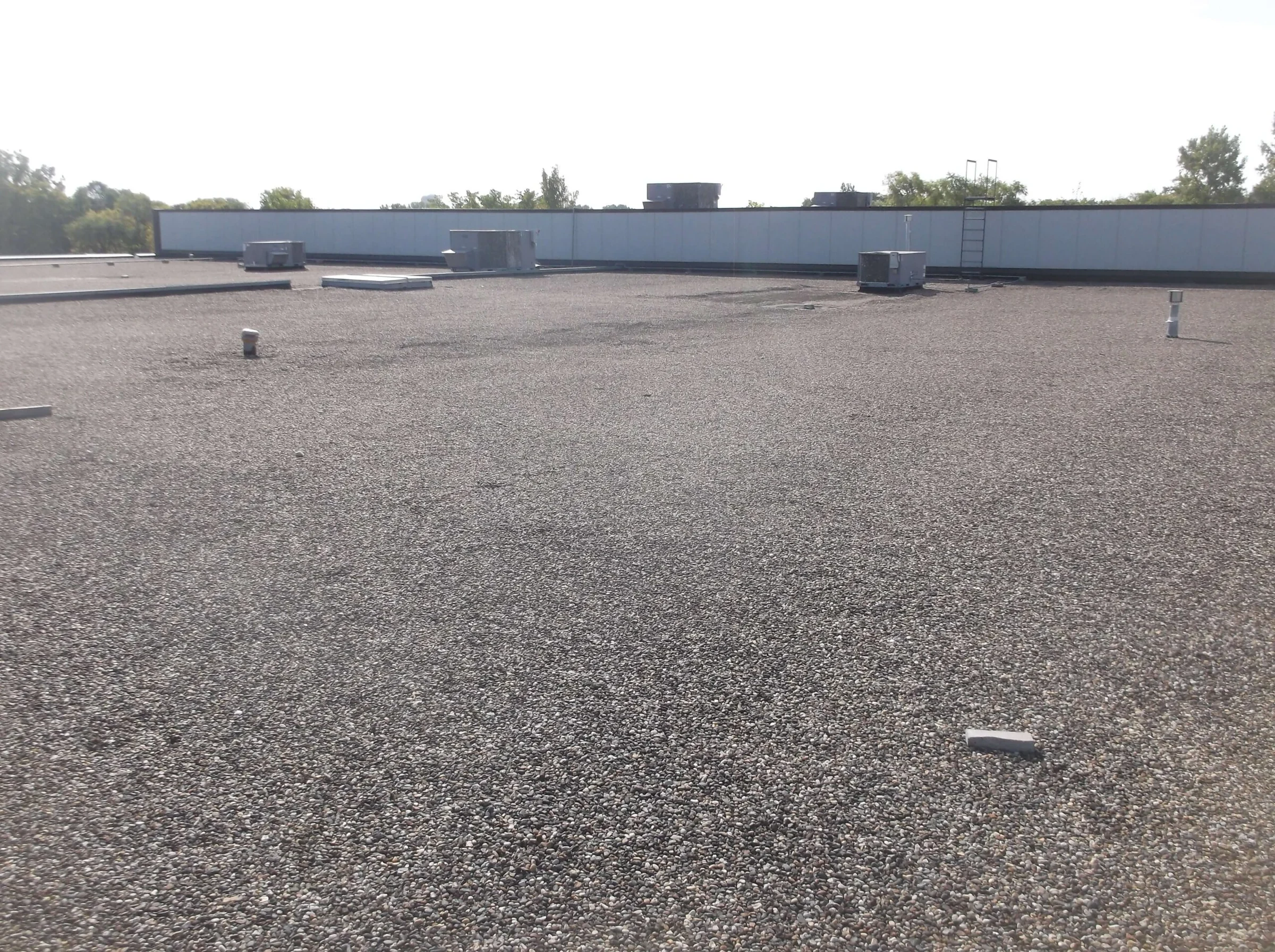
Traditional built-up roofs are finished with a layer of gravel embedded in a flood coat of bitumen, which protects the underlying plies from UV exposure and adds fire resistance. Some newer built-up installations use a granulated cap sheet instead of loose gravel, which changes maintenance needs and how the roof handles foot traffic during service calls to rooftop equipment.
On a replacement or recover project, we make sure the proposal specifies:
Building and fire codes limit how many roof layers can be stacked before a full tear-off is required, and a lot of the legacy institutional buildings around Albany are closer to that limit than owners realize. Each added layer also increases the dead load on the structure, which matters on older buildings where the original design didn't anticipate multiple recover cycles.
We check existing layer count and roof deck condition before recommending another recover. On a roof that's already carrying two layers with a history of wet insulation, another recover just delays a tear-off that's coming regardless, and we'll say so instead of selling a short-term fix.
The building's structural drawings, when they still exist for older institutional properties, tell us what dead load the deck was designed to carry. On a roof this old, that documentation isn't always available, which is when a structural engineer's opinion becomes part of the recover decision rather than something we guess at from the roof surface alone.
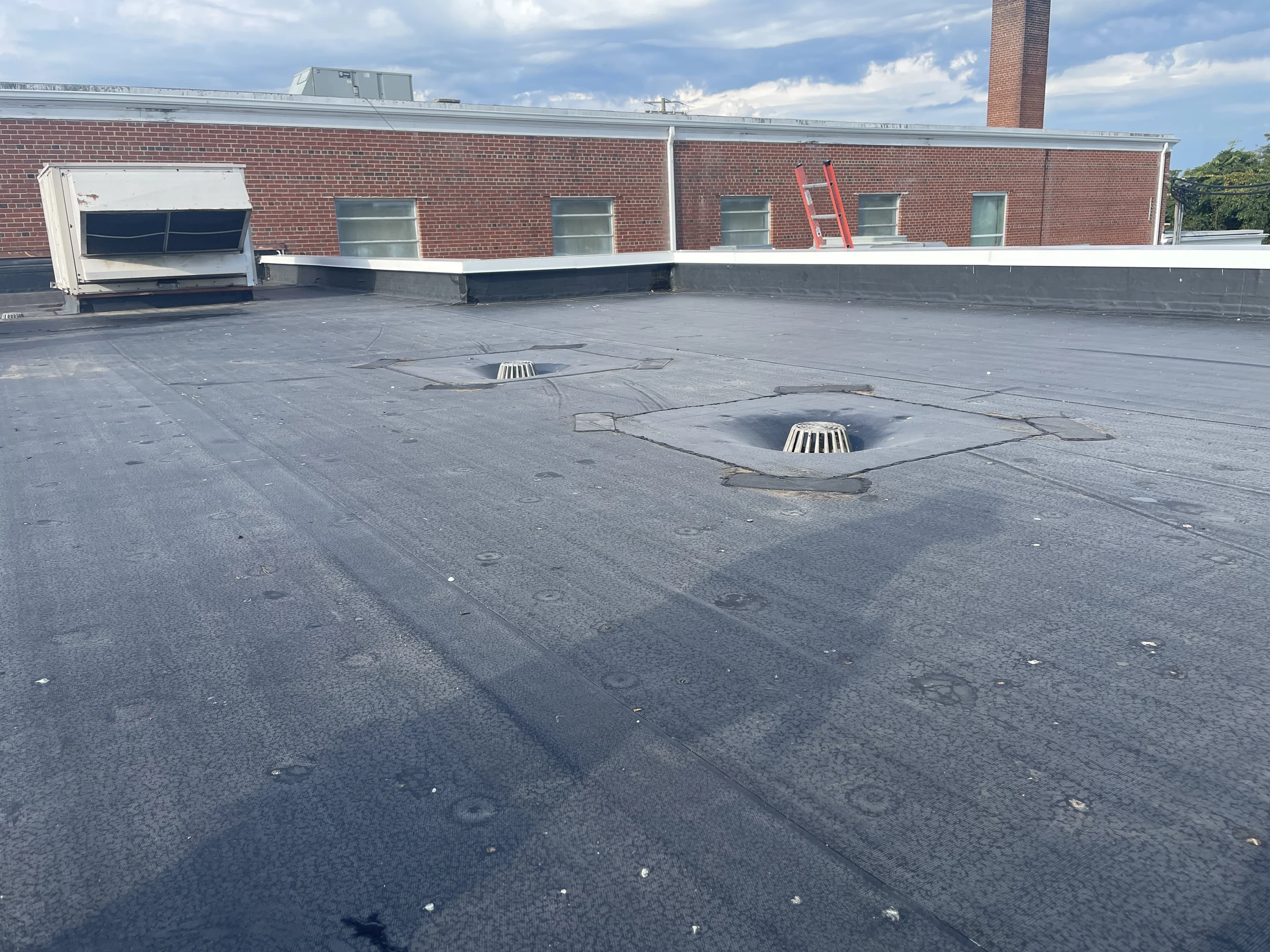
Gravel-surfaced built-up roofs are prone to drain and scupper clogging as loose stone migrates over the years, and clogged drainage combined with the Capital Region's freeze-thaw cycle through late winter creates standing water that refreezes repeatedly against the roof's flood coat. That repeated freeze-thaw stress is a major driver of blistering and cracking on older gravel roofs.
Clearing drains and correcting slope with tapered insulation during a recover project addresses the root cause instead of just resurfacing over the same drainage problem.
A core sample or roof cut tells us exactly what's in the existing assembly. We won't guess at layer count from a visual inspection alone before recommending a recover.
It depends on your maintenance access and drainage history. Gravel adds UV and fire protection but clogs drains over time; cap sheet is lower maintenance but has different wear characteristics.
Sometimes, if the existing roof is dry and structurally sound. That's a separate evaluation from a same-system recover and depends on the building's structural capacity and drainage needs.
Trapped moisture between plies, often from inadequate bitumen application during original installation or from water intrusion that's been sealed in by a later recover layer.
Well-installed built-up roofing with proper bitumen rates and good drainage regularly outlasts a rushed installation by a wide margin, which is why we spend more time on inspection than on selling a specific ply count upfront.