Reading Storm Damage Correctly Before Anyone Writes a Repair Scope
Review the scope, field conditions, system options, and planning considerations for this commercial roofing topic.
Read More →
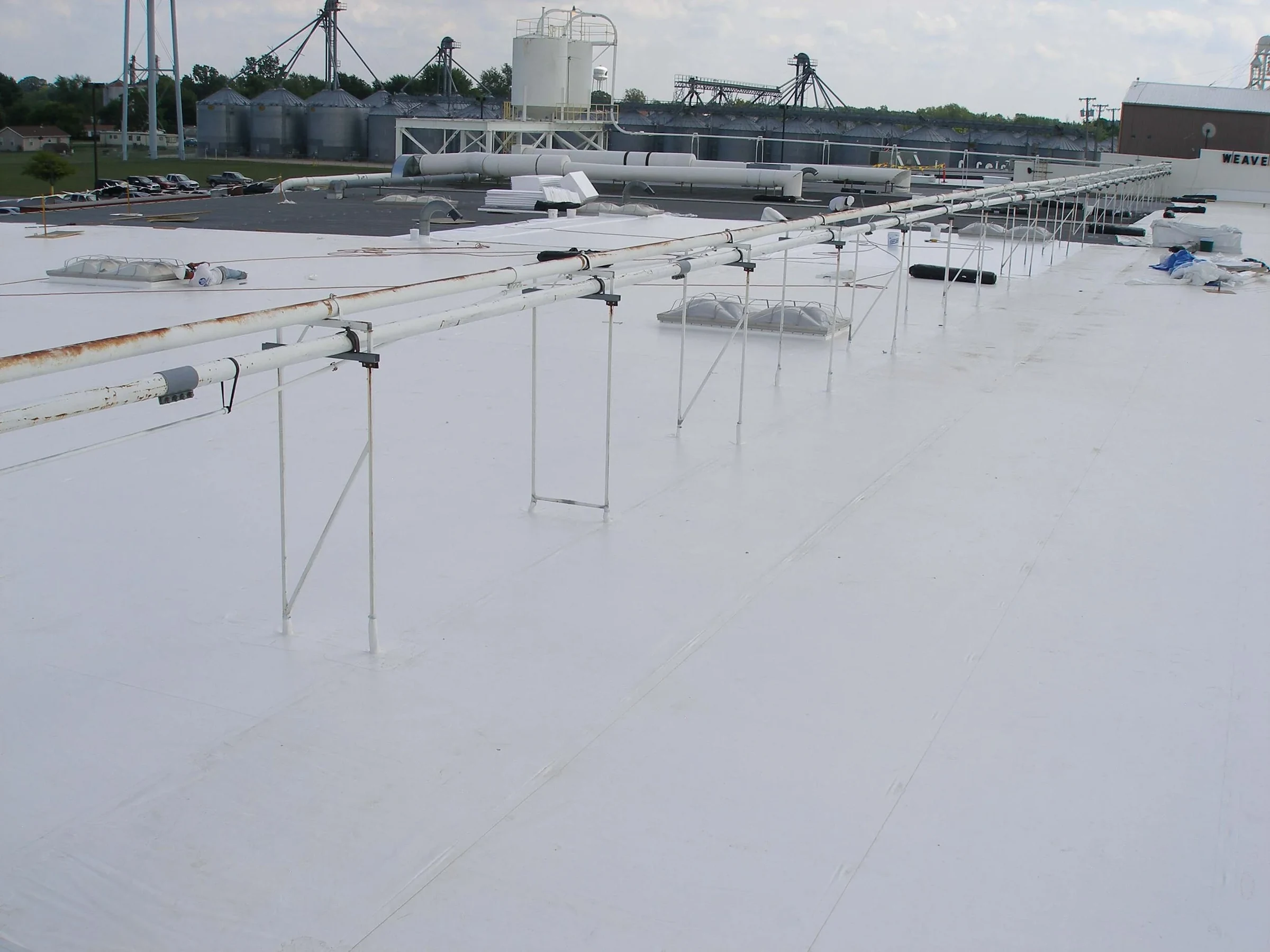
TPO is the membrane we spec most often for large flat roofs across the Capital Region, from state office buildings around downtown Albany to the distribution buildings near the CSX Selkirk yard. It's also the membrane where bid language gets vaguest, so knowing what should be in your proposal matters as much as the material itself.
Big flat roofs dominate here, and TPO handles that footprint well. State agency buildings near the Empire State Plaza have enormous roof decks with rooftop mechanical loads that were often added decades after original construction. TPO's white reflective surface and heat-welded seams hold up under that combination of size and equipment traffic.
The Amazon fulfillment building along I-90 in Schodack and similar warehouse roofs in Rotterdam and Glenville are the other category we see constantly. These roofs are large, often over 100,000 square feet in a single field, and the seam count alone makes weld quality the difference between a roof that lasts and one that leaks in year four.
We also install TPO on support buildings tied to the SUNY Poly NanoTech complex and vendor buildings around the Malta tech corridor, where roof penetrations for exhaust and process equipment are more numerous than a typical office building.
"TPO roofing system" on a proposal tells you almost nothing. Membranes come in 45, 60, and 80 mil thicknesses, and the difference between a 45 mil and 60 mil membrane on a 100,000 square foot roof is a real cost gap that a contractor can quietly absorb by downgrading the spec without changing the word "TPO" anywhere on the paperwork.
Attachment method matters just as much. Mechanically fastened TPO is cheaper to install but leaves more penetrations through the membrane. Fully adhered systems cost more up front but perform better in high-wind conditions and around rooftop equipment clusters. A bid should say which one you're getting and why, rather than listing a single square footage price.
Seam welding is where labor quality shows up years later. Robotic hot-air welders produce a more consistent seam than hand welding on long straight runs, and a contractor who tells you which method they're using, and why, is usually the one who understands the roof.
A TPO membrane is only as good as what's under it. On older Capital Region buildings, especially anything built during the state's mid-century expansion, the existing roof deck often has flat or minimally sloped insulation that leaves standing water after a rain or a spring thaw.
Tapered insulation systems correct that by building slope into the insulation layer itself, directing water to drains instead of letting it sit. A proposal that doesn't mention insulation layout or R-value, and just says "insulation as needed," is a proposal where drainage hasn't actually been engineered for your roof.
On a TPO project we typically look at:
TPO seam welding and adhesive work both depend on temperature. The Capital Region's installation season narrows in late fall and doesn't reopen until temperatures stabilize in spring, which means a roof that needs replacement in November is usually looking at emergency dry-in now and full installation later, not a rushed cold-weather install.
We plan TPO projects around that window rather than promising a timeline that ignores it. A contractor willing to install membrane in marginal cold-weather conditions to hit a deadline is a contractor creating a seam-integrity problem you'll deal with later.
Not every TPO project starts with a bare deck. On buildings that already carry one recover layer, code and moisture conditions both factor into whether a second recover makes sense or whether it's time for a full tear-off. Wet insulation underneath an existing roof won't dry out under a new membrane, it just gets sealed in.
We run a moisture assessment before recommending either path, because a recover bid that skips that step is a bid that's guessing at what's actually inside your roof assembly.
60 mil is the common baseline for large flat roofs with regular rooftop equipment traffic. 80 mil gets specified where foot traffic or mechanical loads are heavier, and we'll walk you through when that upgrade earns its cost.
Not always. Fully adhered performs better in wind and around equipment clusters, but mechanically fastened can be the right call on a straightforward field with fewer penetrations, at a lower cost.
It depends heavily on square footage, deck condition, and how many rooftop units and penetrations are on the field. We give a schedule range after the roof walk, not before.
Sometimes, depending on the condition of the existing roof and what a moisture scan finds. We won't recommend a recover over a roof with hidden wet insulation.
Inconsistent hand-welding on long seam runs and inadequate flashing at penetrations are the two most common causes we find during inspections of roofs installed by other contractors.