What a Roof Inspection Should Document, Not Simply Confirm
Review the scope, field conditions, system options, and planning considerations for this commercial roofing topic.
Read More →
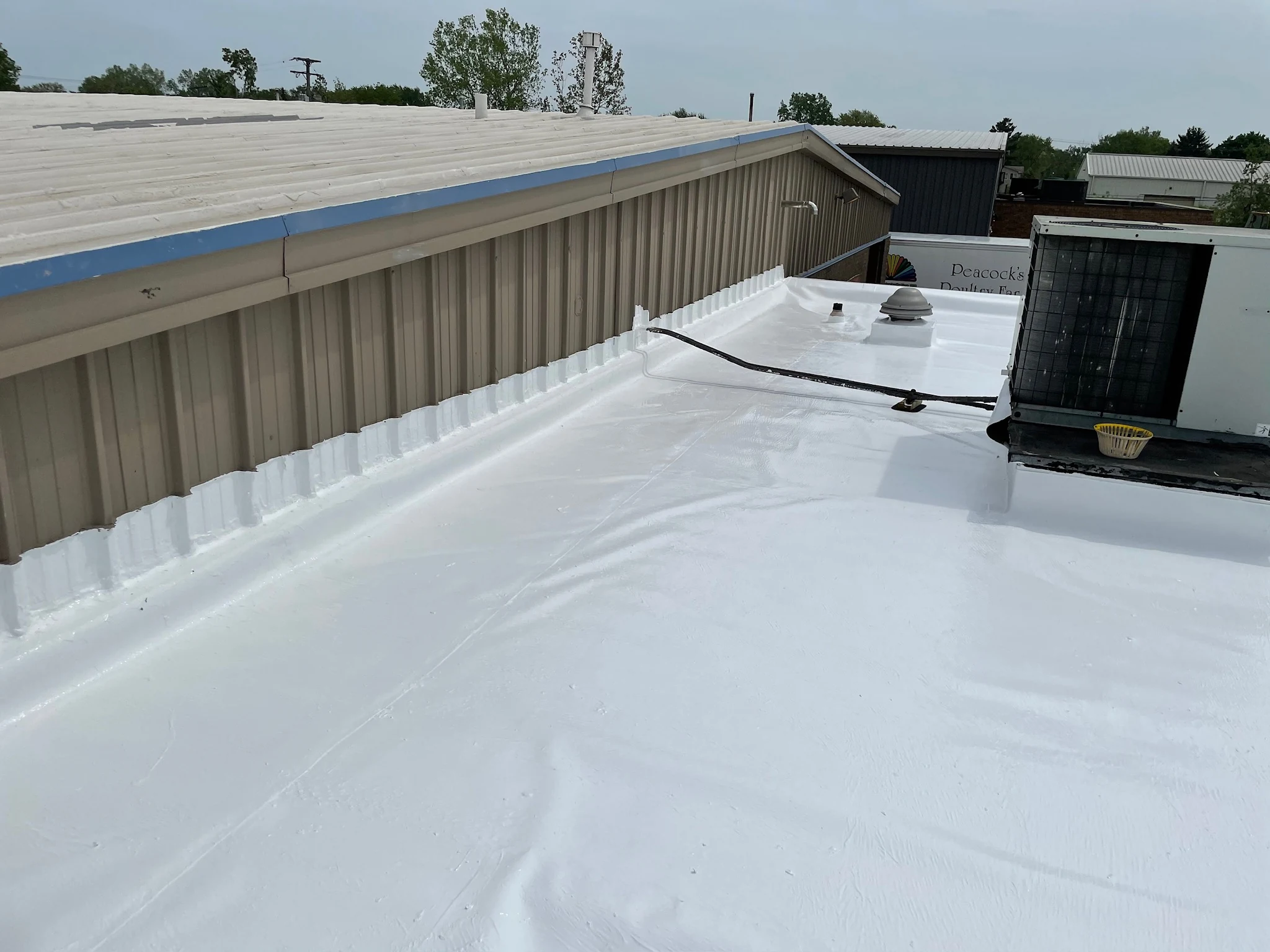
A coating recommendation starts with adhesion, moisture, drainage, membrane condition, detail preparation, and warranty eligibility—not every existing roof is a restoration candidate. Acrylic roof coatings cost less than silicone and work well on roofs that actually drain, which describes a lot of the retail and office building stock we see along the Wolf Road corridor and around Guilderland's Western Avenue retail area. The tradeoff is that acrylic doesn't handle standing water the way silicone does, and matching the coating to the roof's drainage reality is the first decision, not an afterthought.
Retail buildings and office parks around Crossgates Mall, Wolf Road, and the Latham office corridor tend to have properly sloped roofs designed to drain in the first place, without the flat institutional footprint that creates ponding on older state buildings downtown. On roofs like these, acrylic coating restores reflectivity and UV protection at a lower cost than silicone, without giving up performance where it counts.
We also use acrylic frequently on metal roof recoating, since it bonds well to properly primed metal surfaces and is a common choice for extending the life of an aging metal roof on a retail strip or light commercial building without a full panel replacement.
The most common problem we find on acrylic coating jobs done by other contractors is a coating applied to a roof with a known ponding area. Acrylic coatings can soften, lose adhesion, or degrade faster than expected under prolonged standing water, and a contractor who applies acrylic to a low spot that holds water after every rain is setting that area up to fail years ahead of the rest of the coated roof.
If a roof has any ponding history, that's the point where we either recommend silicone instead, or address the drainage problem directly with tapered insulation before coating, rather than coating over a condition that's going to undermine the work.
Acrylic coating performance depends on how much material actually goes down per square foot, generally applied as a base coat and top coat to reach the manufacturer's specified coverage rate. A bid that quotes a flat price per square foot without stating the gallons-per-square coverage rate is a bid where a thin, under-spec application is indistinguishable from a properly done one until the coating starts failing early.
On an acrylic coating proposal we check for:
When acrylic coating goes over an existing metal roof, whether standing seam or R-panel, proper adhesion depends on a compatible primer applied to a clean, rust-treated surface first. Skipping primer, or applying acrylic directly over a surface with active rust or chalking paint, produces a coating that looks fine on installation day and starts peeling within a season or two.
We treat rust spots and check for chalking before any metal recoat, since coating over an unprepared surface is a cosmetic fix, not a real one.
Acrylic coatings need a dry cure window, and the Capital Region's shoulder seasons don't give a large margin for error. A coating applied too close to a rain event, or in temperatures near the product's minimum threshold, won't cure properly and can wash or fail early. We schedule acrylic projects with enough buffer in the forecast to let the coating cure fully before weather exposure, rather than squeezing a job in ahead of a forecasted system.
The decision comes down to drainage. A roof that sheds water properly, with no low spots holding standing water more than a day or two after a rain, is a good acrylic candidate at a lower cost than silicone. A roof with any documented ponding needs silicone, or a drainage fix, instead. We'll tell you plainly which category your roof falls into rather than defaulting to whichever product has a better margin.
Some roofs fall in between, with one section that drains cleanly and a separate low corner near a rooftop unit pad that holds water after every storm. On those mixed roofs, we'll sometimes recommend acrylic across most of the field with silicone reserved for the specific ponding area, rather than paying for silicone across a roof that mostly doesn't need it.
Generally yes, which makes it the practical choice on well-draining roofs where silicone's ponding resistance isn't needed.
No. Rust treatment, cleaning, and a compatible primer are necessary steps for the coating to actually bond and last on a metal surface.
The coating in that area tends to soften or fail well ahead of the rest of the roof. That's why we check drainage history before recommending acrylic over silicone.
Most systems use a base coat and a top coat to reach the coverage rate needed for proper performance, applied per the manufacturer's gallons-per-square specification.
It depends on temperature and humidity, and we build a weather buffer into scheduling so the coating has time to cure before rain exposure.