Roof Capital Planning for Capital Region Office and Retail Portfolios
Review the scope, field conditions, system options, and planning considerations for this commercial roofing topic.
Read More →
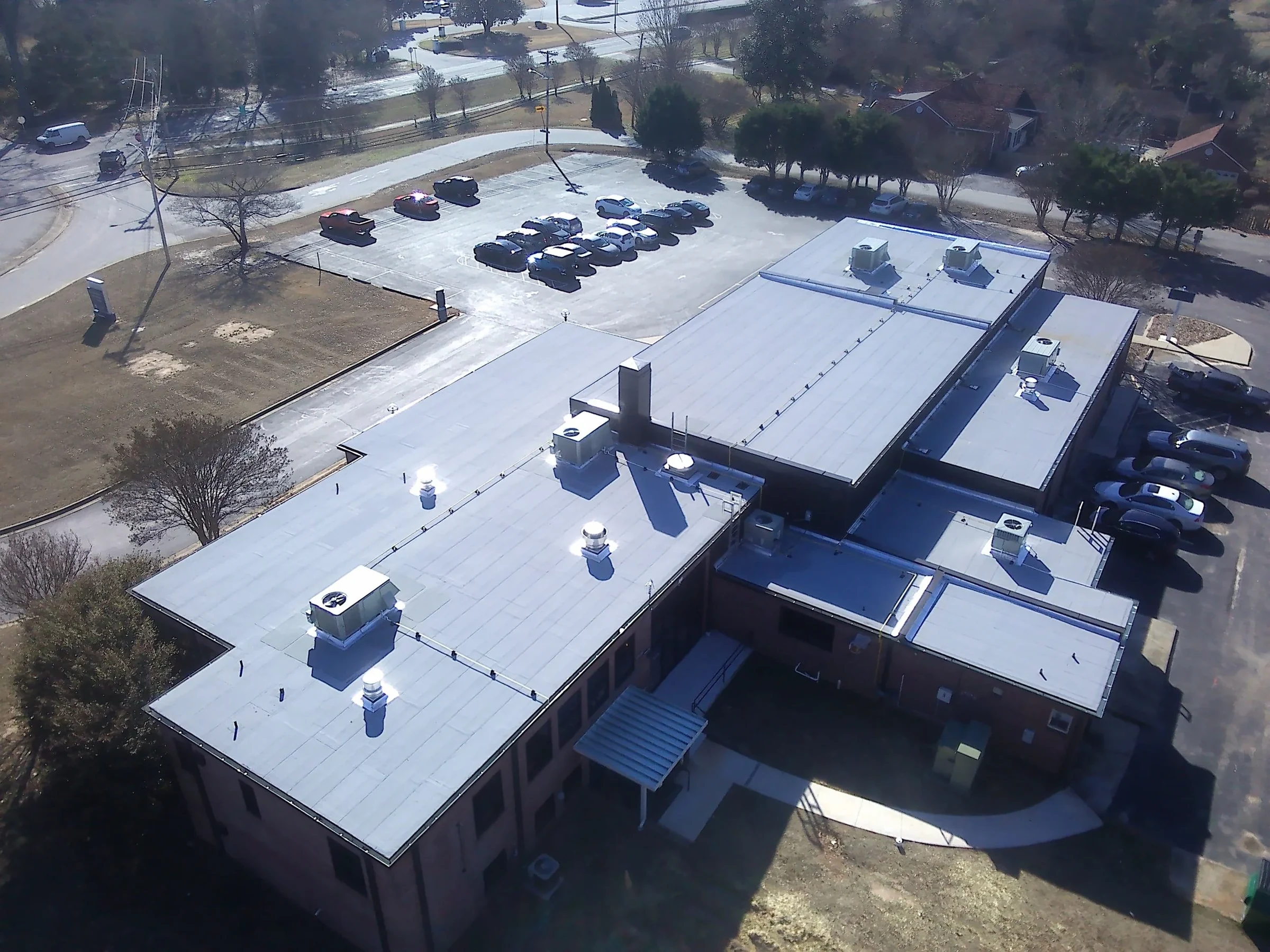
Albany carries more government and institutional square footage than most cities its size, and nearly all of it sits under flat or low-slope roofs built in the same handful of construction waves. Facilities managers at the Office of General Services, county government, and local school districts don't shop for a roof the way a private landlord does. Every contract runs through public procurement rules first, and a roofing quote that skips over those rules usually isn't the bargain it looks like on paper.
Downtown, that means the state office towers ringing the Empire State Plaza and the older Capitol-adjacent buildings that predate it, most on roofs original enough to be approaching a second or third recover cycle. County government buildings, courthouses, and public safety facilities across Albany, Rensselaer, and Schenectady counties carry the same aging pattern on a smaller scale.
School districts add another large slice: K-12 buildings from Colonie to Guilderland to smaller districts out toward Ravena, plus the Capital Region's SUNY campuses, where roof work has to clear a separate layer of state university approval before it reaches a construction schedule. Municipal buildings in the small cities around Albany, Watervliet's city hall and public works garage among them, round out the list with older built-up and modified bitumen roofs that a small municipal budget replaces in pieces rather than all at once.
The state's Office of General Services runs contracting for a large share of Capitol Complex and state office roofing, and its process looks nothing like a private commercial bid. Vendor prequalification, current bonding capacity, insurance certificates at the levels the contract specifies, and an MWBE participation plan all have to be in place before a bid is even eligible for consideration, not assembled afterward once you've won.
County and municipal procurement runs its own separate track, usually a competitive sealed bid process with its own bonding thresholds and its own timeline tied to a legislature or county executive's approval calendar. We keep bid bond and performance bond capacity current specifically so a public opportunity doesn't stall on paperwork that should already be sitting in a file.
New York's Wicks Law requires public owners to award separate prime contracts for general construction, HVAC, electrical, and plumbing on covered projects, instead of letting one general contractor hold the whole job and sub everything else out. Roofing scope typically falls inside the general construction prime, but on a job with rooftop mechanical work, drain tie-ins, or new electrical runs to rooftop equipment, we're coordinating directly with separate primes who answer to the owner independently rather than to us.
That changes how a schedule gets built. A roofing crew used to running its own sequence on a private job has to fit curb work, equipment set dates, and crane picks around another prime's schedule instead of its own, and we plan for that coordination cost up front instead of finding it mid-project.
Public work in New York triggers Article 8 prevailing wage requirements, which set minimum rates by trade and county through the Department of Labor's published rate schedule. Certified payroll has to be submitted for the life of the contract, and the state audits it. We run certified payroll as a standing part of how we operate on covered work, not as a special procedure spun up only when a public job lands.
A bid that comes in noticeably lower than everyone else's on a prevailing-wage job is worth a second look. Sometimes it means a contractor is planning to under-report hours or misclassify a trade, and that liability lands on the public owner as much as the contractor once an audit catches it.
A bid packet a facilities manager can actually defend to a board or a comptroller's office should include:
State and school district budgets run on a fiscal year that doesn't match a private owner's calendar, and roof capital requests usually have to clear a board, a legislature, or an agency approval process months before work can start. We build proposal timelines around that calendar instead of assuming a signed contract means a crew starts next week. A school district roof approved in a spring budget vote is planning for a summer construction window, not immediate mobilization.
Security and access add another layer downtown. Capitol Complex buildings and some county courthouses require credentialing and scheduled access windows that a private office building doesn't, and a crew that shows up without the right paperwork loses the day rather than starting work.
Most public works contracts meeting the state's coverage thresholds do. We confirm applicability on the specific contract and county rather than assuming either way going in.
On a roof-only project without HVAC, electrical, or plumbing scope, the practical impact is often smaller, but the separate-prime structure can still apply depending on how the owner packaged the contract. We ask early rather than assuming.
Yes. We keep current bonding capacity and standard public-contract insurance documentation on hand so that part of a bid doesn't hold up a submission.
We sequence tear-off so no roof section sits open overnight, and we build contingency time into a summer-window schedule so a delay doesn't push work into occupied class time.
Yes. Itemized pricing, condition documentation, and warranty terms come standard on public work, since that's typically what has to go into a board packet before a capital expenditure gets approved.