Scheduling Roof Work Around Saratoga's Track Season
Review the scope, field conditions, system options, and planning considerations for this commercial roofing topic.
Read More →
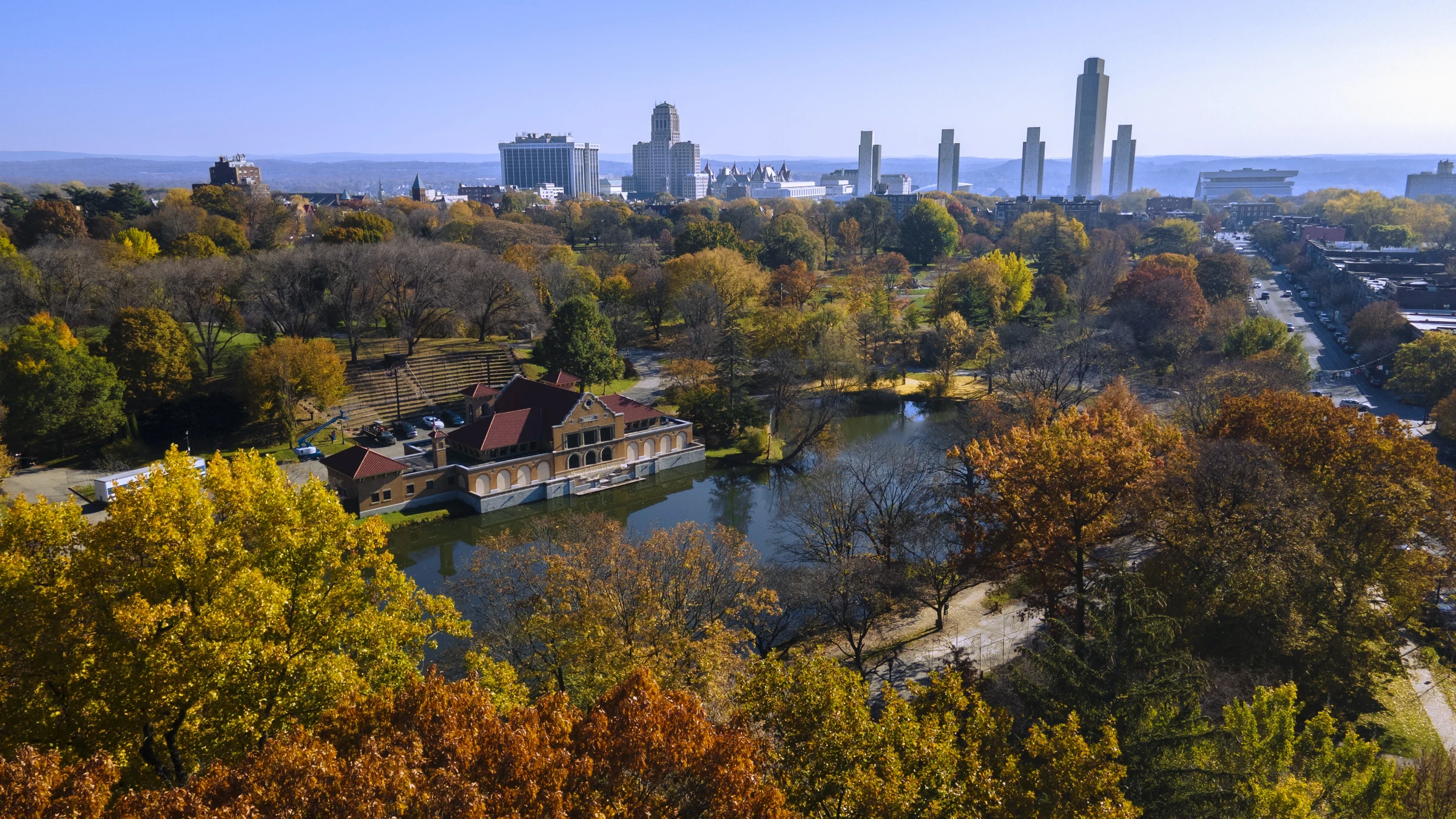
Commercial roofers serving Ballston Spa should document leak sources, wet insulation, drainage, edge details, penetrations, and repair history before recommending a scope. As the Saratoga County seat, Ballston Spa carries more institutional and government roofing than a village its size usually would, alongside the historic storefronts along its downtown streets. County office and courthouse-adjacent buildings sit close to a Main Street commercial district old enough to require some care about how roof work interacts with the historic facades below it.
The county buildings here see steady public foot traffic through the workday, which changes how we schedule and stage a reroof compared to a private office building that can simply close for a weekend. We coordinate with facilities staff on which entrances and parking areas need to stay clear, and we plan debris containment more carefully given the volume of people moving in and out during business hours.
These buildings also tend to have layered mechanical systems added over decades of institutional use — added HVAC, communications equipment, sometimes emergency generator infrastructure — each with its own penetration through the roof that needs to be accounted for individually rather than assumed away.
Ballston Spa's Main Street buildings are old enough that roof work sometimes needs to be coordinated with historic district guidelines, particularly where parapet caps, cornices, or visible roof edge details are part of the building's protected facade. That's a coordination step, not a roofing complication by itself, but it needs to be planned for from the start rather than discovered mid-project when a visible detail turns out to need approval before it can be altered.
Behind those facades, the actual roof surfaces are usually standard low-slope membrane, often patched multiple times over the building's history with materials that don't match or bond well to each other. Peeling back one of those patch layers on a storefront roof frequently reveals two or three different eras of repair, each done to a different standard.
A quote that doesn't ask whether a building sits in a historic district, or doesn't flag that a government building will need scheduling coordination with facilities staff and public access requirements, hasn't done the homework this kind of project actually needs. We've seen jobs stall mid-project because a contractor started tear-off on a visible parapet detail without checking if it needed approval first.
Ballston Spa sees the same freeze-thaw cycling as the rest of the Capital Region, and on older downtown buildings with patched, uneven membrane surfaces, that cycling finds every seam that doesn't bond cleanly. We inspect these roofs section by section rather than assuming uniform condition, since a building patched over multiple decades rarely ages evenly across its whole roof.
Snow load on the flatter county building roofs also deserves specific attention, since institutional buildings from certain eras were designed to older code minimums, and equipment added since then adds weight the original design didn't anticipate.
When a project needs historic district input, we build that into the schedule up front, getting the right approvals before ordering materials for anything visible from the street, rather than after. For county and institutional buildings, we work directly with facilities staff on phasing so public services aren't disrupted during the work, and we document existing conditions with photos before starting so there's a clear record of what was there before we touched it. For county projects that go through a formal bid process, that documentation also supports whatever reporting the facilities department needs to show for the public record.
We've also found it worth checking whether a building's roof has ever been surveyed for the historic district in the first place, since some older commercial structures downtown were built before the current historic guidelines existed and may not be classified the way an owner assumes. Confirming that early avoids either an unnecessary review or an unpleasant surprise mid-project, and it's a phone call that costs nothing compared to what a stalled permit costs once a crew is already mobilized.
It depends on whether the work affects anything visible from the street, like a parapet cap or cornice. We check this before starting any project on Main Street.
Yes, we coordinate with facilities staff on entrance access, parking, and debris containment so public operations aren't disrupted.
It usually means uneven condition across the roof. We inspect section by section rather than assuming the whole roof has aged the same way.
It varies, which is why we build that step into the schedule from the start rather than treating it as an afterthought once materials are already ordered.
Single-ply membrane systems, mechanically attached or adhered depending on the deck, generally replace old patched-together roofing well once the historic-facade details are handled correctly.