Rail Yard Dust, Industrial Park Roofs, and Rotterdam's Retail Strips
Review the scope, field conditions, system options, and planning considerations for this commercial roofing topic.
Read More →
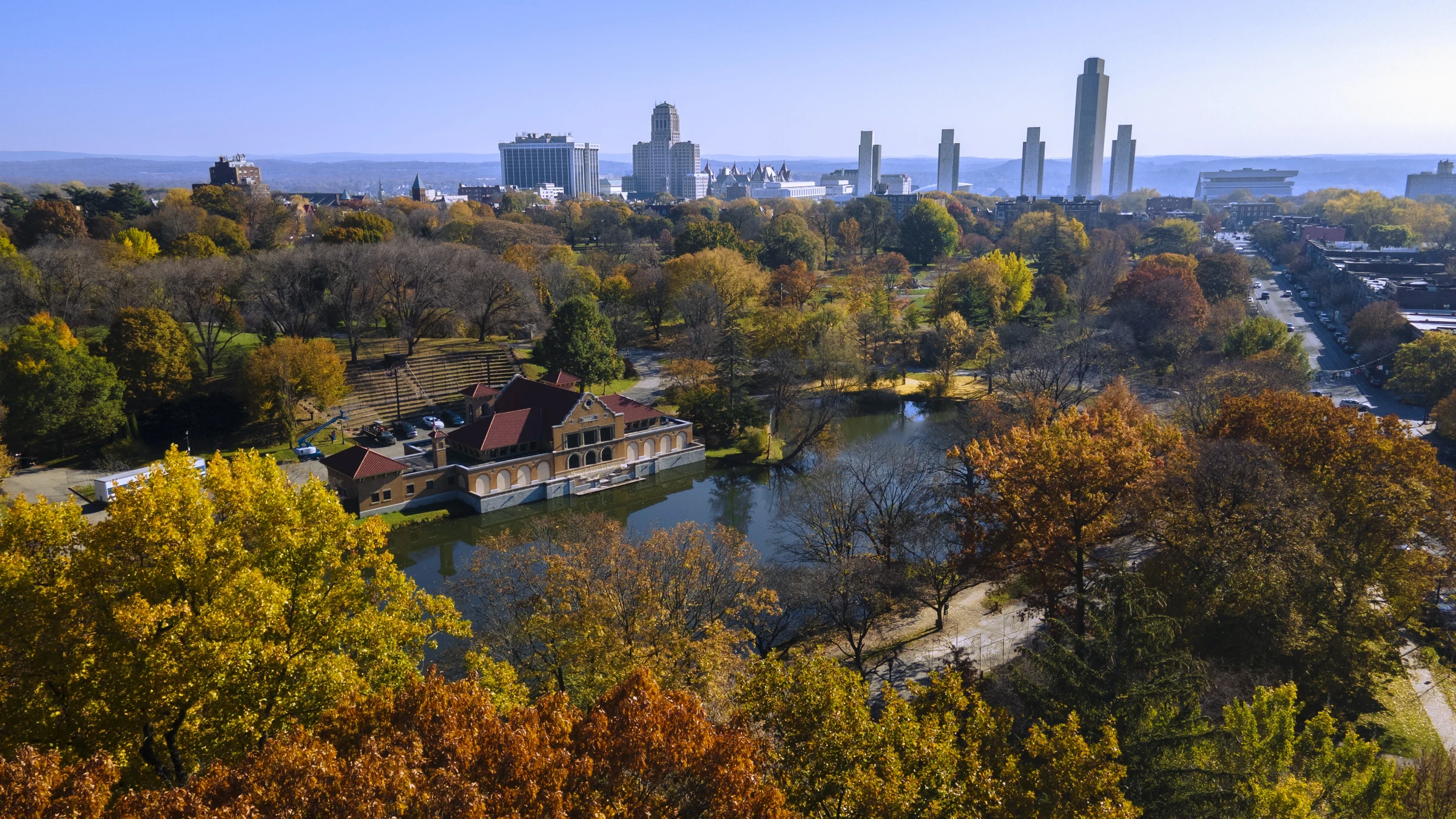
For commercial properties in Latham, the defensible choice between repair, restoration, and replacement starts with roof-system condition, moisture findings, drainage performance, and remaining service life. Latham runs on three different roof types that rarely get priced the way they should: low-rise office parks off Route 9 and Route 155, big-box and strip retail around Latham Farms, and a handful of buildings tied to defense and technology contractors who care as much about who is on their roof as what is on it. A bid that treats all three the same way is a bid that has not actually looked at the building.
Many of the office parks scattered through Latham went up in the 1980s and 1990s with ballasted EPDM or early mechanically attached systems, and a lot of that original roofing is well past any reasonable service life. The problem is not that these roofs are old. It is that they get re-covered again and again without anyone checking whether the deck and insulation underneath can still support another layer.
We pull core samples before recommending a recover over a tear-off on these buildings. Wet insulation hiding under ballast stone is common, and a contractor who skips the core cut is either guessing at your insulation budget or planning to bill you for the surprise later as a change order.
A handful of buildings around Latham house defense contractors, tech suppliers, and other tenants who require background checks, escort requirements, or restricted photography before a crew sets foot on the roof. That changes the schedule math on a project in ways a generic bid never accounts for: badge processing takes days, not hours, and a crew that shows up unescorted gets turned away, which costs you the day.
We ask about facility security requirements before we ever put a start date on paper. A proposal that does not mention access clearance for one of these buildings was written without a phone call to the tenant, and that is a scheduling risk you are inheriting for free.
Latham Farms and the retail strip along Route 9 are mostly large single-tenant boxes and multi-tenant plazas where the roof membrane crosses lease lines that nobody on site can explain. Anchor stores often carry their own roof responsibility separate from the plaza owner, and HVAC penetrations added by individual tenants over the years rarely get documented anywhere. A leak in a shared plaza roof can turn into a finger-pointing exercise between three parties before anyone gets a repair crew on site.
Before we quote work on a multi-tenant retail roof here, we map every penetration back to a tenant and note who added what, when we can determine it. That saves weeks of arguing over responsibility once a bill needs to get paid.
Office parks and retail buildings set back from Route 9 catch open wind exposure that a lot of older ballasted systems were never rated for by current code. Loose stone ballast on an aging roof is a liability during a high-wind event, both for the roof itself and for anything below it. We check ballast weight and fastening patterns against current wind zone requirements rather than assuming a roof that has survived twenty years will survive the next storm the same way.
Freeze-thaw cycling through a Capital Region winter works on seams and flashing details the same way here as anywhere else in the area, but the flat, exposed roofs common to Latham's office parks tend to pond water at low points that were never regraded after decades of rooftop equipment additions. We check drainage against current roof loading, not the original design from thirty years ago.
Background checks and badge processing for restricted facilities can take several business days, and a crew without clearance simply cannot start. We build that lead time into the schedule up front instead of discovering it the morning a crew gets turned away.
It depends on lease terms and which party owns the section where the leak originates, which is exactly why we map penetrations and ownership before quoting repair work. Skipping that step is how a repair gets delayed for weeks while parties argue over who pays.
That depends entirely on what the core cuts show. A dry deck with sound insulation can sometimes support a recover system. Wet insulation or a compromised deck cannot, and no contractor should recommend either option without opening the roof first.
Open office park and retail sites along Route 9 see wind loading that older ballasted systems were not always designed for under current codes. We check fastening patterns and ballast weight against present-day wind zone requirements before recommending a system.
Deck condition from core cuts, a real insulation rate, access requirements for any restricted facility, a penetration and responsibility map for multi-tenant buildings, and separate material and labor warranty terms. If a proposal is missing any of those, ask why before you sign.