Commercial Roof Insurance Claims in Albany, NY
Review the scope, field conditions, system options, and planning considerations for this commercial roofing topic.
Read More →
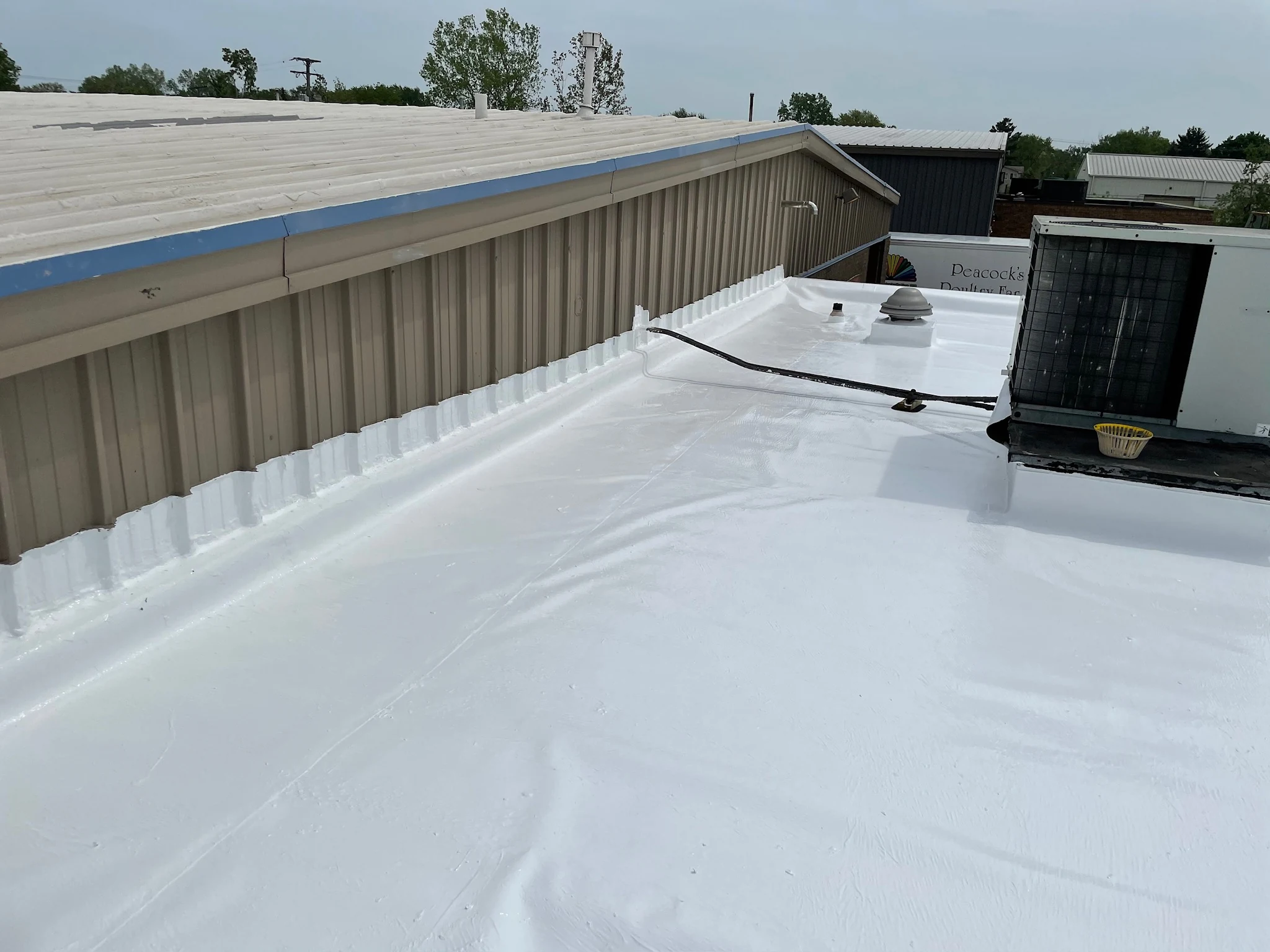
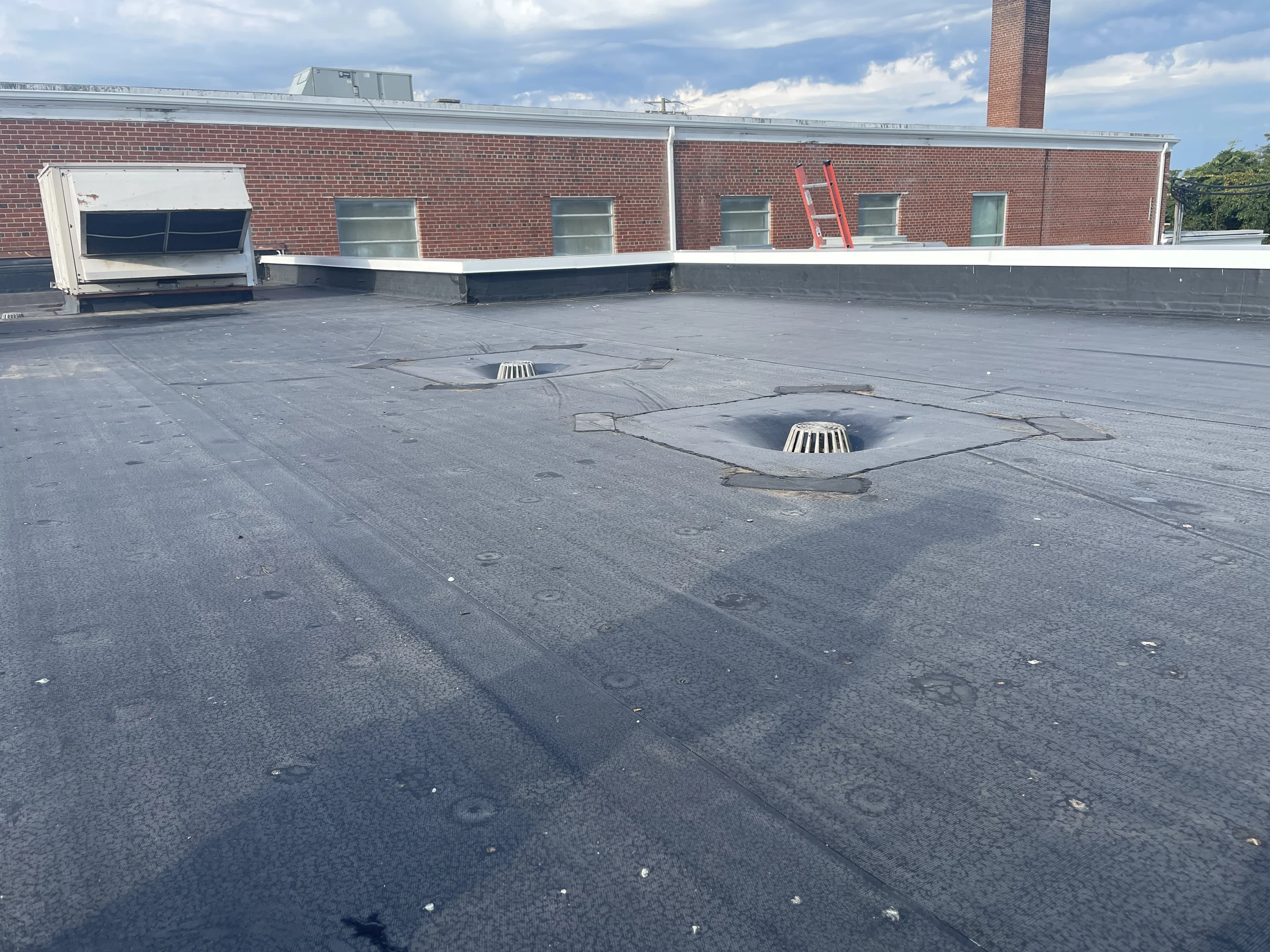
Hail isn't the Capital Region's most frequent roof peril, but summer thunderstorm cells produce it often enough that we field hail claims most years, usually on buildings that took a hit during a fast-moving storm nobody expected to be severe. The documentation challenge with hail is different from wind or snow: on a flat membrane roof, hail damage can be subtle enough that an insurer's first response is to call it cosmetic and deny functional coverage, which makes how the damage gets documented the whole ballgame.
Hail damage on a sloped shingle roof is often visually obvious, bruising and granule loss anyone can spot. On a flat EPDM, TPO, or modified bitumen roof, hail impact can leave marks that look minor from a distance but represent real reduction in membrane thickness and long-term weather resistance at each impact point. We check for scarring, bruising, and mat exposure on modified bitumen, and for punctures or thinning on single-ply membranes, at the actual impact points rather than relying on a general roof-condition summary.
A common outcome on commercial hail claims is a carrier determination that damage is cosmetic only, meaning it doesn't affect the roof's function, even when the owner and contractor believe otherwise. The way to document around that determination isn't to argue the point generally; it's to show functional impact specifically, membrane thickness measurements at impact points compared to undamaged areas, evidence of accelerated granule loss or mat exposure that will shorten service life, and impact density mapped across the roof so the pattern is clearly hail and not scattered pre-existing wear.
We walk the full roof rather than only the areas an owner or tenant already noticed, since hail impact density often varies significantly across a single roof depending on wind direction during the storm and roof orientation. We also check rooftop equipment, curbs, vent caps, and mechanical housings, since dented equipment is sometimes the clearest evidence a hail event actually occurred at damaging size, useful supporting evidence even when the membrane damage itself is subtle.
On a hail claim more than most, we want to walk the roof with the adjuster directly and point to specific impact points with the measurements and comparisons in hand, because a written report alone is easier to dismiss as cosmetic than a physical walkthrough where the functional impact is visible and measured on the spot.
Older membrane roofs sometimes take hail impact on top of surfaces that already had some age-related wear, and being honest about that overlap matters. We document what's clearly fresh impact damage separately from what looks like pre-existing condition, and we scope the repair to what the hail event actually caused, not the roof's entire remaining wear pattern, because an inflated scope invites the exact cosmetic-damage pushback we're trying to avoid.
We're your roofing contractor, not a public adjuster. We document the hail impact and its functional effect on the membrane; we don't estimate settlement value or argue the claim on the owner's behalf.
We document functional impact specifically: membrane thickness or condition at impact points compared to undamaged areas, mat exposure, and impact density patterns, rather than a general description of marks on the roof.
Yes. Flat roof hail damage is often not visible from ground level or even from a casual roof walk, which is why we recommend a documented inspection specifically looking for impact points after any hail event in the area.
Impact evidence on membrane roofing generally persists longer than on shingles, but documentation is still stronger the sooner it happens, before additional weather or roof traffic disturbs the impact points.
That's typical. Hail impact density varies with wind direction and roof orientation during the storm, so we map affected sections specifically rather than treating the whole roof as uniformly damaged or undamaged.
No. Scope depends on impact density, membrane type, and remaining service life; some hail claims support a targeted repair, others support replacement when density and existing wear together make repair impractical.